Coaching
Confidence Isn’t Loud, It’s Prepared
By Khai Tran · · 5 min read
Prepare for client meetings by reviewing current data, planning questions, and rehearsing explanations without trying to fill every pause.
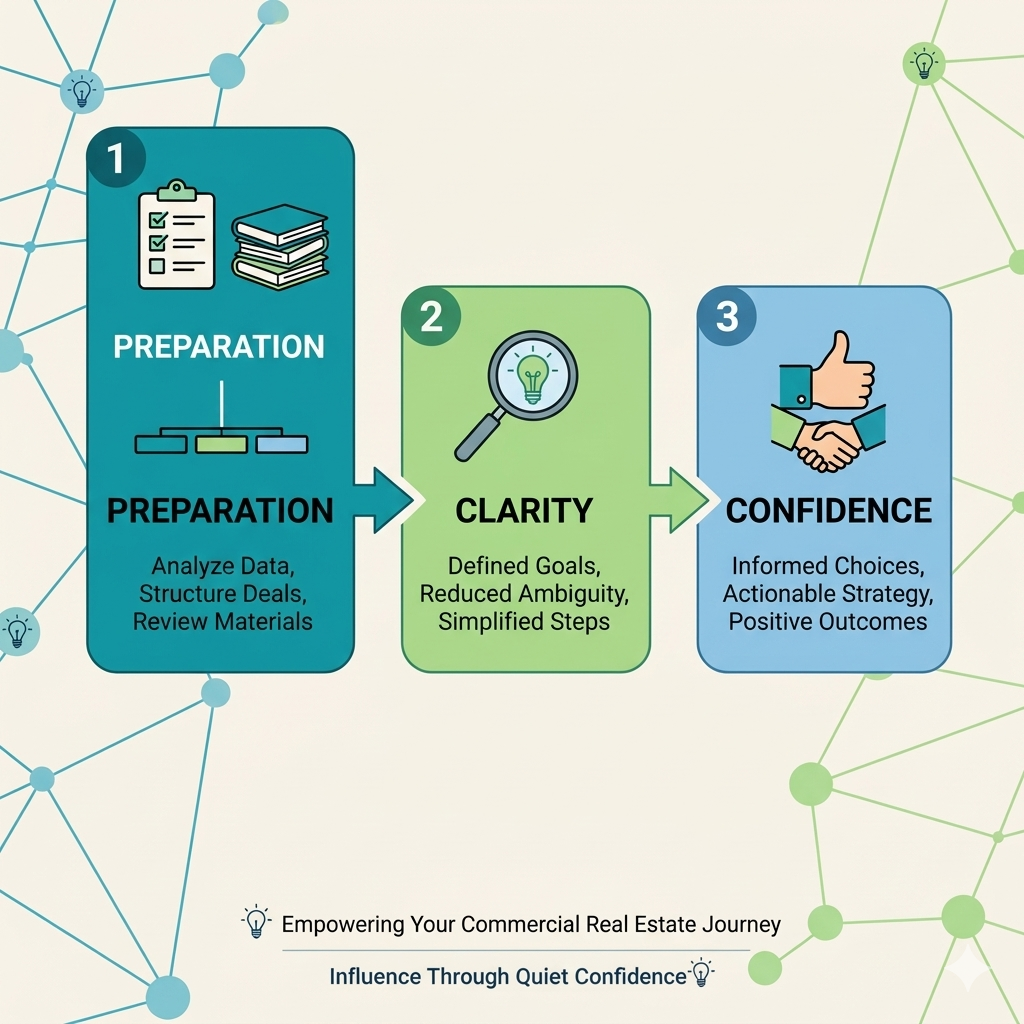
If you prefer time to prepare before a client meeting, use it to review the facts and plan your questions. You do not need to fill every pause to lead a useful conversation.
Preparation can help you explain what you know, identify what you still need to check, and leave the meeting with a clear next step.
What Quiet Confidence Actually Looks Like
Quiet confidence looks like:
- Speaking clearly without rushing
- Asking thoughtful questions
- Explaining complex topics simply
- Remaining calm during negotiations
- Letting knowledge, not volume, lead the conversation
Be willing to say when something needs checking instead of supplying an answer you cannot support.
Preparation Creates Confidence
Before a meeting, review the topic and prepare for likely questions. The following steps give you a place to start.
1. Know the Numbers
Before any listing presentation or buyer consultation, review:
- Local market statistics
- Average days on market
- Comparable sales
- Current inventory levels
Use current information and note where it came from.
2. Prepare Your Questions
Prepare questions that help you understand the client’s priorities.
Example discovery questions:
- “What would make this move feel like a win for you?”
- “What concerns do you have about the process?”
- “If we found the right property tomorrow, what would need to happen next?”
Listen to the answers and leave room for follow-up questions.
3. Rehearse Your Explanations
Many agents struggle when explaining complex parts of the process.
Things like:
- appraisal gaps
- contingencies
- pricing strategy
- inspection negotiations
Confidence grows when explanations become simple and repeatable.
Here is a sample introduction to adapt:
“My job isn’t just to help you buy a home. It’s to help you avoid expensive mistakes along the way.”
Practice the explanation aloud. Keep the facts and any uncertainty clear.
Prepare for the Negotiation
Review the comparable evidence and the client’s priorities before discussing a position.
For example:
“Based on the comparable sales and current demand, this price puts us in a strong negotiating position.”
Use a statement like this only when the supporting evidence fits. If you need to check a fact, say so and follow up with the answer.
Before the next meeting, choose one explanation to rehearse and one question you want to understand better.
Download the free Introvert Discovery & DM Scripts Pack → https://khaitranofficial.com/introvert-scripts