CRE
The Fundamentals of Commercial Real Estate for New Agents
By Khai Tran · · 6 min read
Start with property types, income and expense calculations, local market research, and the questions to bring to experienced brokers and advisers.
Start With the Property and Its Use
Commercial assignments can involve leases, business operations, financing, and several decision-makers. Start with one property type and learn how its income, expenses, and physical requirements fit together. Work with your broker to identify assignments that match your experience and where specialist help is needed.
1. Know Your Property Types
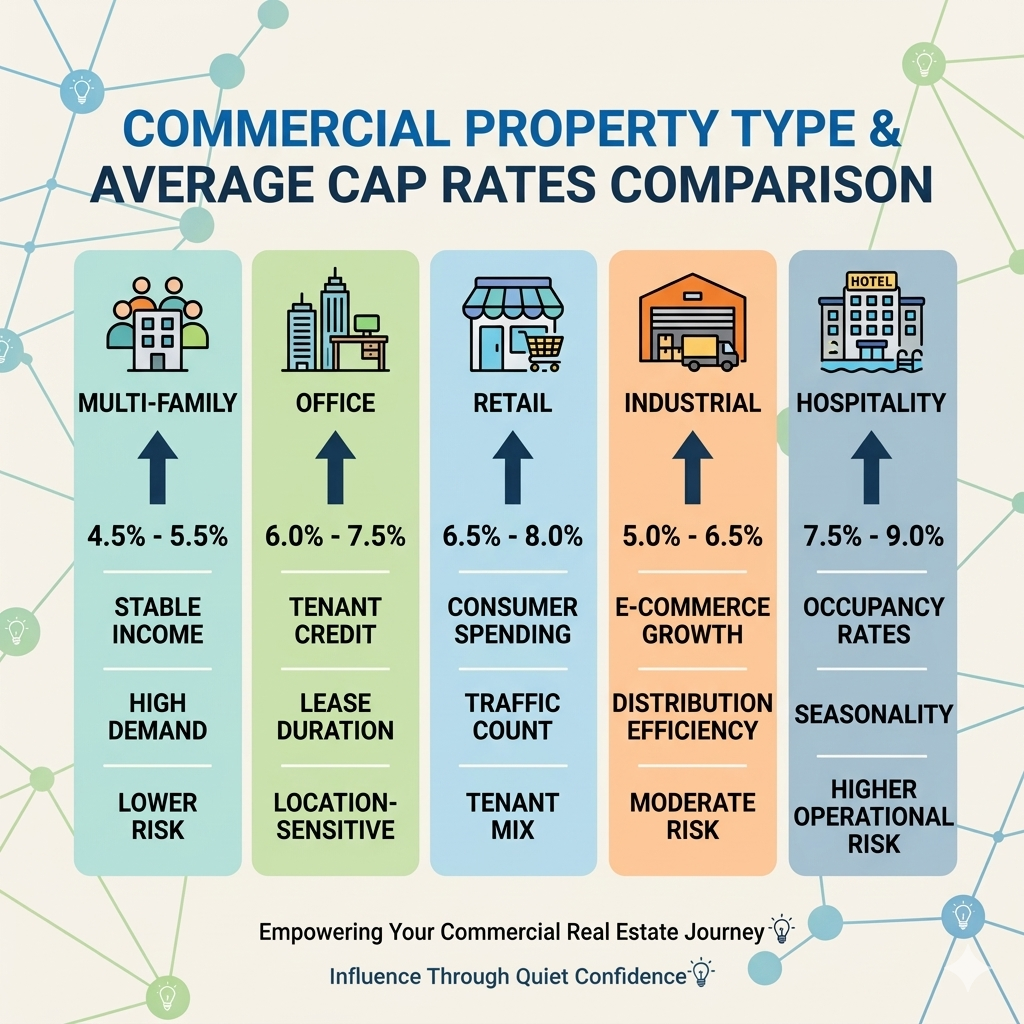
Commercial real estate includes several property types, each with unique characteristics:
Office Buildings
- Class A: premium locations, high-end amenities
- Class B/C: classifications often associated with older buildings or fewer amenities; definitions vary by market
Retail Spaces
- Strip malls vs. standalone stores
- Foot traffic, demographics, and lease structures matter
Industrial Properties
- Warehouses, distribution centres, manufacturing spaces
- Focus on location and logistics capabilities
Multifamily & Mixed-Use
- Apartment complexes and mixed-use buildings
- Review occupancy, operating costs, capital needs, and local demand; income and value can rise or fall
Understanding the nuances of each property type sets the stage for meaningful conversations with investors.
2. Master Commercial Real Estate Fundamentals
Key financial metrics new agents must know:
Cash-on-Cash Return
- Measures annual pre-tax cash flow relative to total cash invested
- Example: $50,000 annual cash flow ÷ $500,000 investment = 10% CoC
Cap Rate
- Net Operating Income ÷ Property Value
- An unleveraged operating-income ratio, not a complete measure of risk or total return
NOI (Net Operating Income)
- Property operating income minus operating expenses; exclude debt service, capital spending, depreciation, and investor income taxes
- Essential for accurate valuations
Pro Tip: Practice calculating these metrics on sample properties to build confidence before presenting to clients.
3. Understand the Local Market
CRE is hyper-local. Even within a single city, property demand, rental rates, and zoning rules can vary widely.
- Subscribe to local commercial real estate newsletters
- Track recent sales and lease comps
- Attend networking events with brokers and investors
Practice exercise: Track asking and achieved lease rates separately for comparable buildings in a defined area. Record the source, date, lease structure, and any concessions you can verify.
4. Learn Investor Communication
New agents often focus on properties, but investors care about returns. Tailor your messaging:
- Start with ROI, cap rates, and occupancy trends
- Offer brief, data-backed insights, not generic marketing fluff
- Keep follow-ups concise and solution-focused
Hypothetical script: Replace the figures with verified property information before using it.
"Hi [Investor Name], I reviewed a 20,000 sq ft office property near [location]. It’s fully leased with a 7% cap rate, projecting $80k annual NOI. I’d like to share a full breakdown if you’re interested."
5. Build Your Deal Analysis Skills
Analytical skills separate competent agents from top performers. Learn to:
- Evaluate expenses, income, and financing options
- Compare similar properties for valuation accuracy
- Present findings in a clear, actionable format
Tip: Use spreadsheets or CRE software to simplify calculations and reduce errors.
6. Know the Legal Basics
Commercial contracts are more complex than residential. New agents should understand:
- Lease agreements (triple net, gross, modified gross)
- Purchase and sale agreements
- Zoning laws and permitting requirements
Learn which issues to raise with your broker and which require a qualified attorney or other specialist. General familiarity does not establish the legal effect of a specific document.
7. Network Strategically
Build working relationships with:
- Local brokers, investors, and property managers
- Commercial real estate associations (e.g., NAIOP, CCIM)
- Mentorship opportunities
Ask experienced colleagues how they review an assignment and when they bring in another specialist.
8. Use Technology and Tools
- CRE platforms: LoopNet, CoStar, or local MLS systems
- Financial modelling templates
- CRM for tracking investor interactions
Automating repetitive tasks lets you spend more time analysing deals and building relationships.
9. Continuous Learning
The market evolves quickly. Stay ahead by:
- Reading CRE newsletters, podcasts, and reports
- Attending workshops and webinars
- Reviewing past deals to learn what worked and what didn’t
Keep a dated research log so you can explain where your market assumptions came from.
10. Start Small and Iterate
You don’t need to close a $5M property immediately. Begin with:
- Smaller multi-family buildings or retail spaces
- Shadowing experienced CRE agents
- Practicing deal analysis and investor calls
Over time, your confidence, skill, and reputation compound.
Choose a sample property and work through the income, expenses, lease terms, and open questions. Have an experienced broker review your analysis before using it as the basis for client advice.
Download the free 10 CRE Terms Guide below.
Download the free 10 CRE Terms Guide → https://khaitranofficial.com/cre-terms