CRE
Understanding NOI: The Metric Every CRE Agent Must Know
By Khai Tran · · 6 min read
Understand what NOI includes, what it excludes, and how to calculate it from property income and operating expenses. Includes a worked retail example.
Read Time
6 min read
Understanding NOI: The Metric Every CRE Agent Must Know
NOI helps separate a property’s operating results from its financing. Start with documented income and expenses, then identify assumptions and missing records before using the figure in a valuation or cash-flow analysis.
What Is NOI (Net Operating Income)?
NOI is the simplest way to answer one question:
“How much income does this property actually produce?”
The Formula
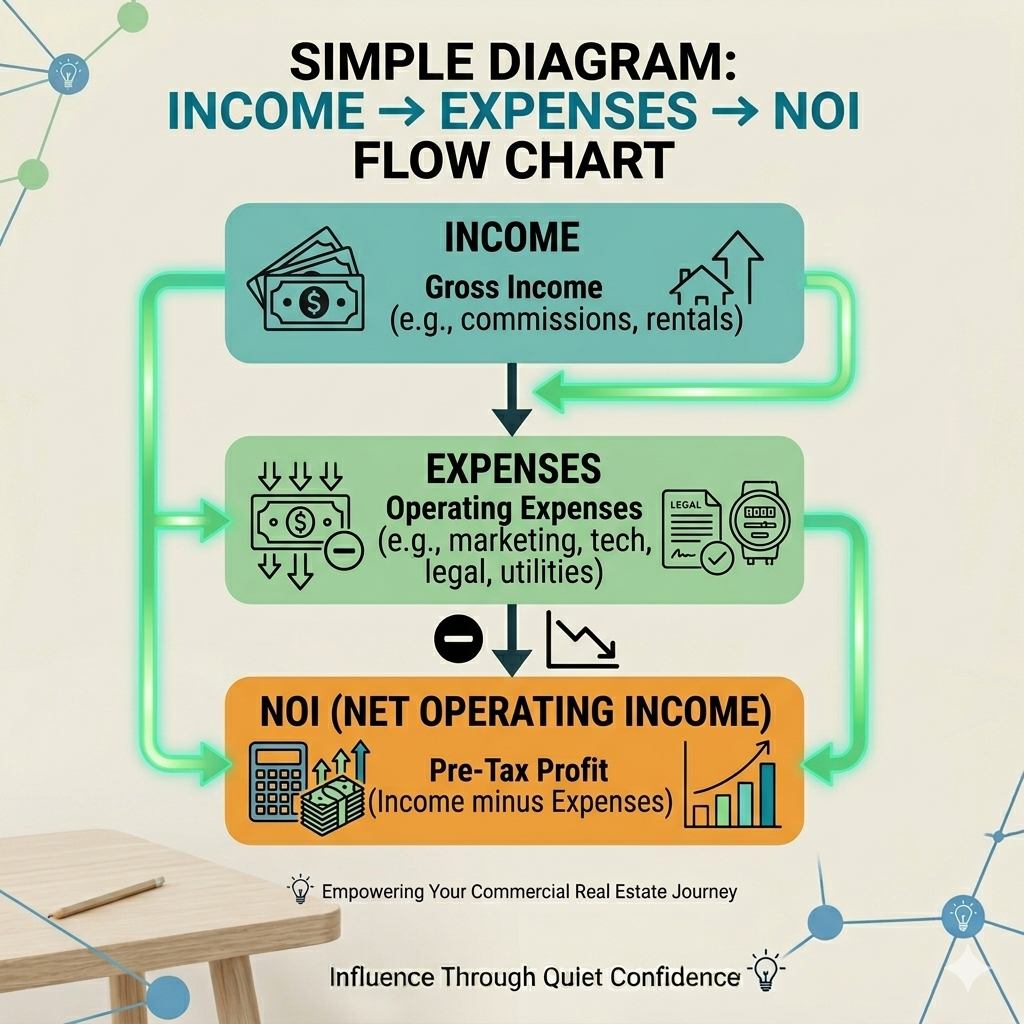
NOI = Effective Gross Income − Operating Expenses
What Counts as Income?
- Rental income
- Parking fees
- Laundry or vending income
- Other service income
What Counts as Expenses?
- Property management
- Maintenance and repairs
- Insurance
- Property taxes
- Utilities (if owner-paid)
What Does NOT Count?
- Loan payments (debt service)
- Depreciation
- Capital expenditures (big upgrades like a new roof)
- Investor income taxes
Why NOI Matters in CRE Investment Analysis
If you remember one thing: NOI is how investors judge the performance of a property.
Here’s Why It’s Critical:
1. It Shows True Property Performance
NOI strips away financing so you can see how the asset performs on its own.
2. It Drives Property Value
Value = NOI ÷ Cap Rate
Holding the cap-rate assumption constant, higher NOI produces a higher indicated value. Actual pricing also depends on risk, market evidence, property condition, and other deal terms.
3. It Builds Investor Confidence
Show the calculation and its sources so the investor can question the assumptions and follow your work.
How to Calculate NOI (Step-by-Step)
Let’s make this practical.
Hypothetical Example
Assume the following annual income is after vacancy and credit losses, and that the listed expenses cover this simplified example. A real analysis needs complete property records.
A small retail property:
Income:
- Rent: $120,000/year
- Parking: $10,000/year
Total Income = $130,000
Expenses:
- Taxes: $20,000
- Insurance: $5,000
- Maintenance: $15,000
- Management: $10,000
Total Expenses = $50,000
Final NOI Calculation
NOI = $130,000 − $50,000 = $80,000
This example produces $80,000 of annual NOI before financing and capital spending.
The Most Common NOI Mistakes Agents Make
This is where deals fall apart.
Mistake #1: Including Debt Service
Mortgage payments are NOT part of NOI.
Why it matters: Different investors use different financing. NOI must stay neutral.
Mistake #2: Ignoring Vacancy
If the property isn’t 100% occupied, your income isn’t either.
Always account for:
- Vacancy rate
- Credit loss
Mistake #3: Underestimating Expenses
Use actual expense records where available. Label estimates and check for missing costs rather than treating an incomplete statement as the full operating budget.
How to Use NOI in Real Conversations
This is where your confidence starts to shift.
Simple Investor Conversation Framework
Instead of saying:
“This property makes about $130K annually…”
Say this:
“The property generates about $80K in NOI after operating expenses. At a 6% cap rate, that puts the value around $1.33M.”
That’s a different level of conversation.
A Practice Conversation
Here is an example of how to connect the calculation to an investor’s priorities:
Discovery Call Script
Agent: “Before we look at listings, can I ask, are you more focused on cash flow or long-term appreciation?”
Investor: “Cash flow.”
Agent: “Then we’ll review NOI alongside financing, capital needs, and cash invested. NOI shows the operating income before those additional cash-flow considerations.”
Keep the figures and supporting records available for follow-up questions.
Show How You Reached the Number
When presenting NOI, include the reporting period, sources, vacancy allowance, and expense assumptions. Separate current operations from projections so the investor can see what would need to change.
The Next Step After NOI
Once you’re comfortable with NOI, the next layer is:
- Cap Rate
- Cash-on-Cash Return
- Internal Rate of Return (IRR)
But none of those make sense without NOI.
This is step one.
Practice With the Source Records
Take a sample rent roll and operating statement, reconcile the income, and list the expenses. Note what is missing before calculating NOI. Then review financing and capital needs separately to understand the possible cash flow.
Download the free 10 CRE Terms Guide → https://khaitranofficial.com/cre-terms