Coaching
Plan Your Listing Work During a Slower Market
By Khai Tran · · 6 min read
Review current local evidence, reconnect with homeowners appropriately and prepare clear listing conversations. Keep the plan and seller updates tied to what you can verify.
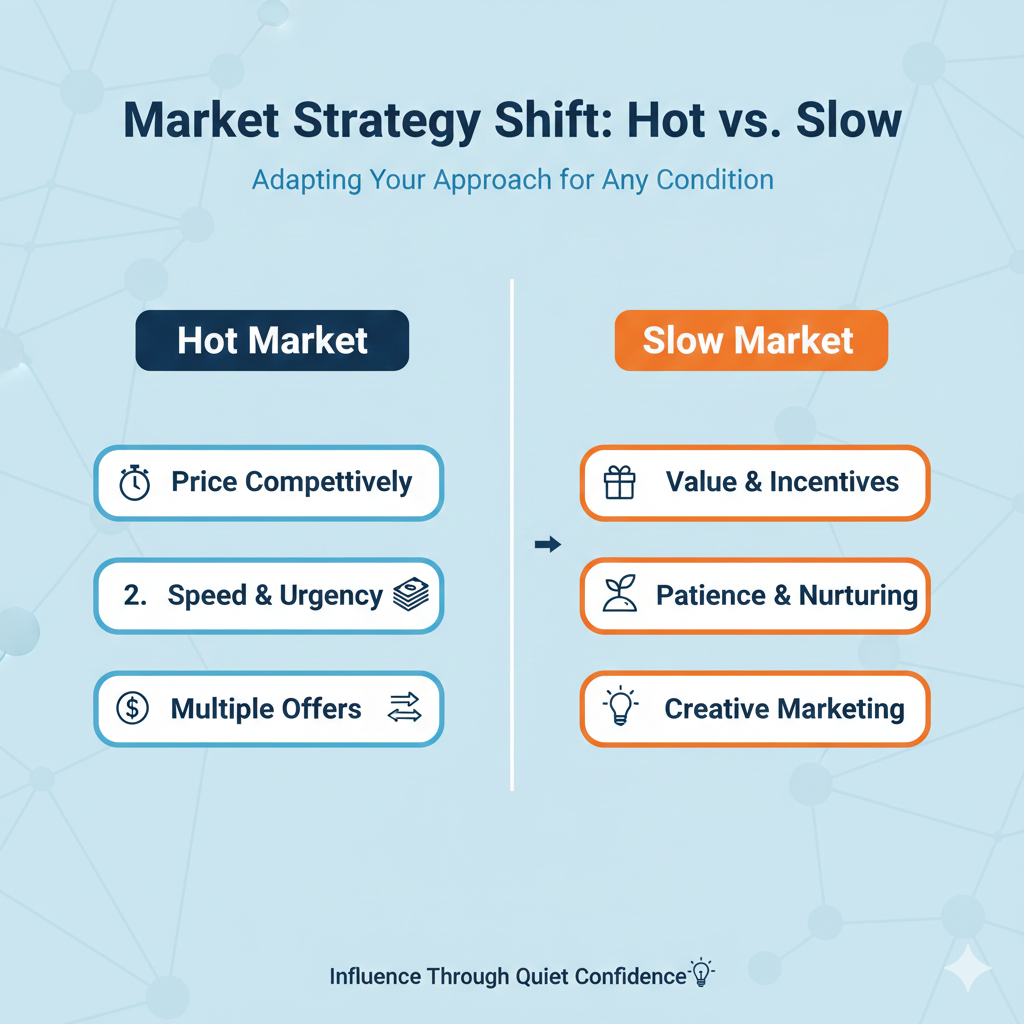
Start With Current Local Evidence
If activity has slowed in your area, review what has changed for the properties and price ranges you serve. Look at listings, recent sales, days on market and buyer feedback before drawing a conclusion about a seller’s options.
Use the plan below to organize research, conversations and follow-up. It does not make a slower market a guaranteed opportunity or predict how many listings you will earn.
1. Shift From “Lead Generation” to “Listing Positioning”
Review the homeowners who have asked to stay in touch and identify who may have a question you can help answer.
Practical Move:
- Review your last 20 contacts.
- Identify homeowners (not buyers).
- Prioritize re-engaging them with value, not urgency.
2. Use a Calm, Data-Backed Conversation (Not Hype)
Sellers in a slow market don’t need motivation. They need clarity.
Ask about the seller’s plans before choosing which market information to explain.
Simple Seller Re-Engagement Script
“Hey [Name], quick question , with the market shifting a bit, have you been curious what your home would realistically sell for in today’s conditions? I’ve been helping a few homeowners reposition strategically.”
Notice:
- No pressure.
- No promises.
- Just positioning.
You’re not selling. You’re offering perspective.
3. Master the Slow Market Real Estate Strategy Framework
Use these four topics to prepare a listing conversation:
The 4-Part Listing Control Model
1. Reset Expectations Early
Show:
- Average days on market
- Current absorption rate
- Active vs. sold comparison
This builds credibility.
2. Explain the Pricing Options
Compare relevant listings and sales, and explain the limits of the available evidence.
You don’t say:
“Let’s list high and see what happens.”
You say:
“Let’s choose an initial price using the current evidence and agree on a review date. We’ll compare inquiries, showing feedback, and competing listings before deciding whether a change makes sense.”
3. Control Communication Rhythm
Set update expectations:
- Weekly data update
- Showing feedback summary
- Strategy adjustments if needed
Calm structure reduces seller anxiety.
4. Pre-Frame the Adjustment Conversation
Before you list:
“If we don’t see strong activity in the first two weeks, we’ll revisit pricing quickly rather than slowly chasing the market.”
Now price adjustments feel strategic, not reactive.
4. Build a “Slow Season Value Touch” System
When buyers pause, your database shouldn’t.
You don’t need daily content. You need intentional touches.
Weekly Value Touch Plan
- Monday: Market snapshot text to 5 homeowners
- Wednesday: Personalized check-in DM
- Friday: Short educational post (pricing, DOM trends, negotiation tips)
Consistency beats intensity.
Introverted agents thrive here because this structured communication, not random networking.
5. Explain What Is Still Uncertain
If homes are taking longer to sell, show the relevant evidence and explain how much it applies to this property. Discuss the seller’s timing and carrying costs without presenting urgency as a certainty.
6. Strengthen Your Listing Appointment Structure
In a slow market, the appointment matters more than ever.
Here is a structure to adapt:
1. Market Reality (5, 7 minutes)
Present data clearly. No drama.
2. Seller Motivation (Ask Deeper)
“On a scale from 1, 10, how committed are you to making a move this year?”
If below 8, explore why.
3. Strategy Presentation
Walk through:
- Pricing logic
- Marketing positioning
- Communication rhythm
4. Clear Close
“Based on what we discussed, I’m confident we can position this correctly. Are you comfortable moving forward and getting this live this week?”
Calm. Direct. Professional.
7. Protect Your Mindset During Slow Cycles
Allow time to review your own workload as well as market activity.
Slow seasons trigger comparison.
You’ll see:
- Agents posting closings.
- Teams boasting volume.
- Social proof everywhere.
But remember: social media is highlights, not pipelines.
Your job is:
- Execute your system.
- Track your activity.
- Measure conversations, not emotions.
Review the work you completed and the conversations it produced before changing the plan.
8. Track Leading Indicators (Not Just Closings)
Closings lag. Conversations lead.
Track weekly:
- Homeowner conversations
- Listing appointments set
- CMAs delivered
- Follow-up touches
These figures help you see activity and follow-up gaps. They do not guarantee a listing or a closing.
Plan the Next Week
Choose the research, outreach and seller updates you can complete. Use current evidence, record what you learn and revise the plan when the facts change.
For example conversations to adapt, download my free Introvert Discovery & DM Scripts Pack.
Download the free Introvert Discovery & DM Scripts Pack → https://khaitranofficial.com/introvert-scripts