CRE
Off-Market CRE Deals Without CoStar
By Khai Tran · · 7 min read
Research a focused owner list, offer useful property information and keep track of follow-up. Off-market status does not establish value or eliminate competition.
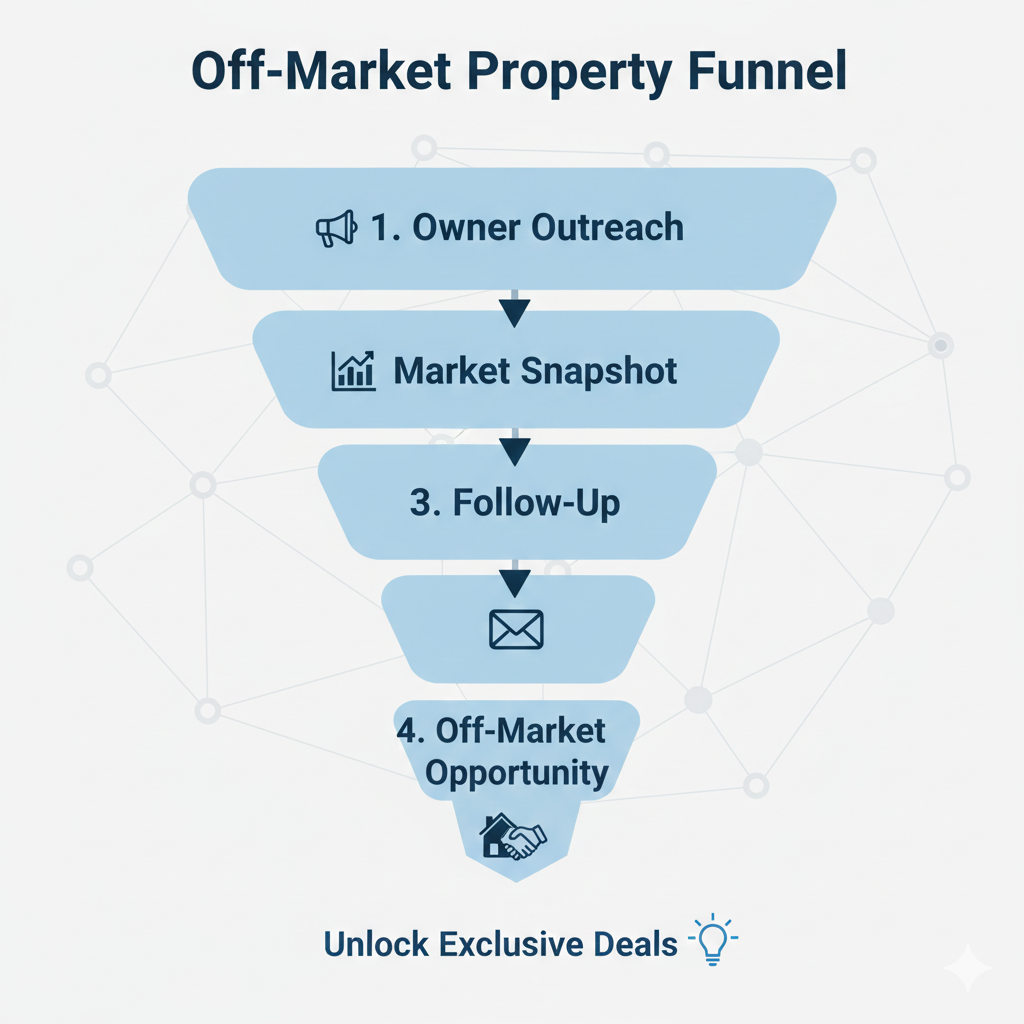
Research Beyond Listed Inventory
Public listings are one place to look for a commercial property. You can also research owners and ask whether they want to discuss a sale or lease. That work takes time, and an off-market property still needs the same careful analysis.
This guide covers a focused research and follow-up process you can use alongside the information sources available to you.
1. Redefine What “Off-Market” Actually Means
An off-market search looks beyond properties being openly offered for sale. These may be properties that are:
- Not publicly listed
- Not widely marketed
- Not actively promoted to the entire brokerage community
Possible conversations include:
- Owners considering a sale
- Landlords fatigued from management
- Investors repositioning portfolios
- Families transitioning assets
Find out whether an owner wants to have a conversation, then respect their answer.
2. Build a Targeted Owner List (Not a Massive One)
The mistake I see agents make is going too wide.
Start with a list you can research carefully. A smaller list with verified ownership and relevant property details is easier to maintain.
Start With:
- One asset class (retail strip, small industrial, medical office, etc.)
- One submarket
- One owner profile (for example, owners of 5 to 20 units or 10,000 to 50,000 SF properties)
Pull data from:
- County tax records
- State business filings
- Property appraiser websites
- Driving for dollars
Keep the list small enough to research the records and follow up appropriately.
3. Offer Information Relevant to the Property
If you call owners asking, “Are you selling?” you sound like every broker.
Instead, lead with insight.
Example Call Script
“Hi John, this is Khai. I specialize in small-bay industrial in the West submarket. I’m tracking lease rates and recent sales, and I noticed you’ve held your property for about 12 years. I’ve prepared a brief update on recent sales and lease rates in the area. Would it be helpful if I sent you a quick market snapshot?”
Use this script only when its factual statements match your experience and the research you have actually done.
4. Master the Market Snapshot Method
A short market snapshot can give an owner something specific to discuss.
Instead of asking for listings, send:
- Recent comparable sales
- Current lease rate trends
- Buyer demand summary
- Cap rate shifts
Keep It Simple:
- One or two pages
- Bullet points
- Clean data
- No fluff
If the owner agreed to a follow-up, use the timing you discussed:
“John, did the market snapshot answer your questions? Is there anything you would like me to look into?”
Record the answer and ask whether the owner would like another update.
5. Create a 90-Day Follow-Up System
Keep a record of the conversation and any next step the owner agreed to. The schedule below is an example to adapt.
90-Day Owner Nurture System
Day 1: Call + leave voicemail Day 3: Send market snapshot Day 10: Follow-up call Day 30: Value update or lease comp Day 60: Short check-in Day 90: Portfolio review conversation
Adjust the example schedule to the owner’s preferences and applicable contact requirements. Stop when someone asks you to.
6. Use Tenants as Intel Sources
Tenants are one of the most overlooked sources of off-market commercial real estate deals.
They may raise questions about maintenance or their own space needs. Verify lease and ownership information through authorized records; a tenant may not know the owner’s finances or plans.
Simple approach:
“How’s your relationship with ownership? Are they long-term holders?”
Respect what the person chooses to share, and do not pass along confidential details without permission.
Sometimes the best off-market deal starts with a frustrated tenant conversation.
7. Use Investor Conversations to Reverse-Engineer Deals
Ask what the investor wants to buy, why it fits their plans and what resources they have available. You can then ask:
“If I brought you a property that met X criteria, how quickly could you close?”
Then document:
- Target returns
- Cap rate thresholds
- Cash-on-cash expectations
- Asset preference
- Equity capacity
Use those answers to narrow the search, and revisit them when circumstances change.
If you have actually qualified a buyer, have their authority and can support the statement, you might say:
“I have a qualified buyer actively looking in this range.”
Do not claim to represent a qualified buyer when you do not.
8. Build a Reputation for Quiet Execution
Ask how the owner wants the property discussed and what information may be shared. Explain the options for marketing and how each affects exposure to potential buyers.
When you position yourself as someone who:
- Screens buyers
- Protects confidentiality
- Avoids unnecessary marketing exposure
you give the owner a clearer basis for deciding how to proceed.
Agree on communication and marketing plans with the owner before proceeding.
9. Understand the Math Before You Source
If you can’t analyze a deal quickly, you can’t confidently pursue off-market commercial real estate deals.
At minimum, you must understand:
- Net Operating Income (NOI)
- Cap rate valuation
- Cash-on-cash return
- Debt service coverage ratio (DSCR)
Quick Example: Cash-on-Cash Snapshot
Purchase price: $2,000,000 NOI: $160,000 Cap rate: 8%
If investor puts 30% down ($600,000) Annual cash flow after debt (assumed, not derived from a lender quote): $70,000
Cash flow divided by the down payment = $70,000 / $600,000 = 11.7%. This is incomplete as a cash-on-cash measure because it omits closing costs, initial reserves, and any further cash needs.
For an actual purchase, include all initial cash required and check the debt-service assumptions before calculating the return.
Keep a Record of the Work
Track the properties researched, the information verified and any follow-up the owner agreed to receive. Use listing platforms, public records and conversations for what each can tell you. None of them guarantees a deal.
Start with one area and a manageable list. Review the gaps in your information before making a recommendation.
Download my free 10 CRE Terms Guide.
Download the free 10 CRE Terms Guide → https://khaitranofficial.com/cre-terms