Coaching
Objection‑Handling Scripts for Low‑Pressure Conversations
By Khai Tran · · 6 min read
Respond to client concerns with questions, time to think and a clear next step. Use these examples as starting points for your own wording.
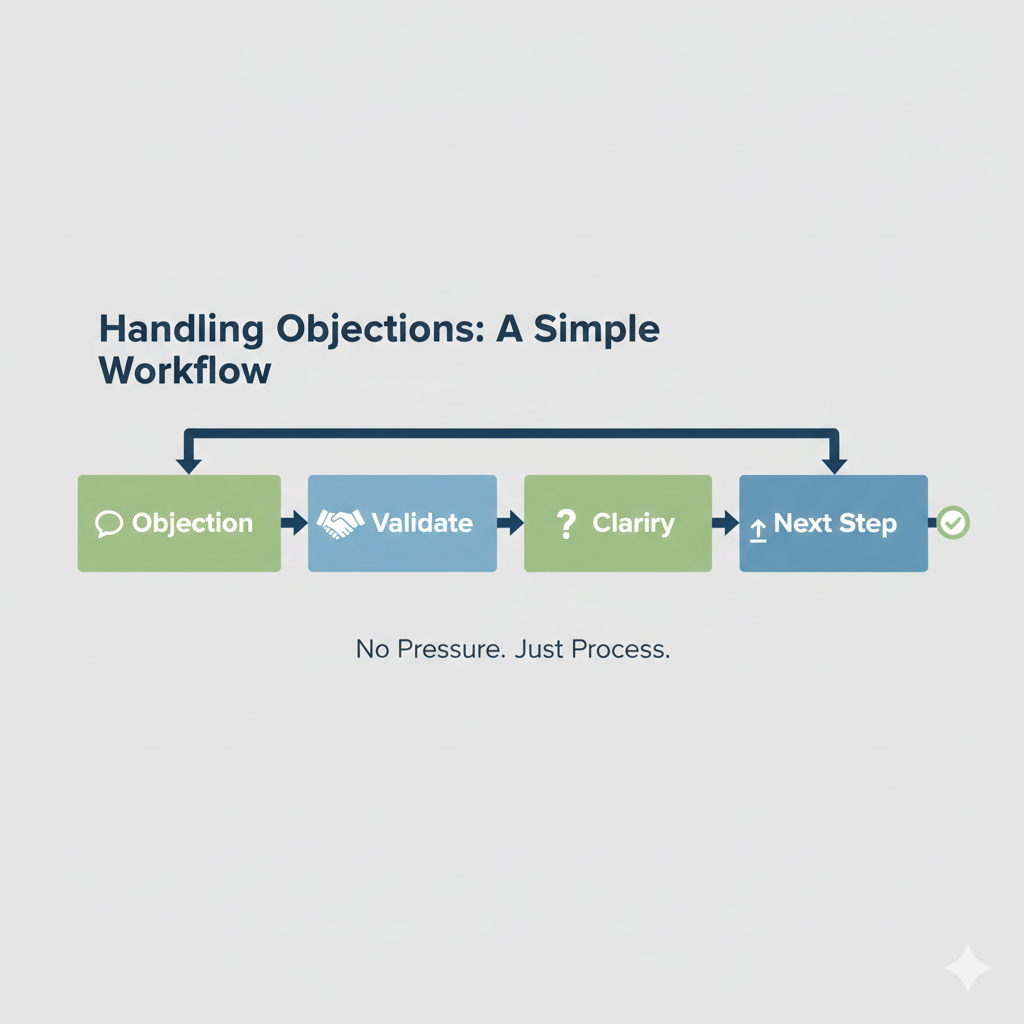
Listen to What the Client Is Saying
A client who hesitates may need more information, more time or a different kind of help. They may also be saying no. Ask a question if clarification would help, then respect the answer. You do not need to turn every concern into a sales conversation.
The 3 Rules of Low-Pressure Objection Handling
Use these reminders before choosing a script.
Rule 1: Slow Down First
Give the client time to finish, and pause before responding.
Rule 2: Validate Without Agreeing
Validation says, “I hear you.” It does not mean, “You’re right and we should stop.”
Rule 3: Offer a Next Step, Not a Close
Low-pressure conversations move forward through small agreements, not big commitments.
Real Estate Objection Handling Scripts You Can Actually Use
These scripts designed to sound natural, not salesy.
Use them as frameworks, not word-for-word commandments.
Objection #1: “We’re Just Looking Right Now”
This is the most common, and most mishandled, objection.
Low-Pressure Script
“That makes sense. Most people start there. While you’re looking, would it be helpful if I pointed out things most buyers miss early on?”
Why it works: You’re not challenging their statement. You’re adding value inside it.
Objection #2: “We Want to Think About It”
Ask whether there is something they want to discuss. They may simply want time.
Low-Pressure Script
“Of course. When clients say that, it’s usually one of two things, price or timing. Which one feels less clear right now?”
Why it works: You invite clarity without pushing for a decision.
Objection #3: “We’re Not Ready to Commit”
Introverted agents often freeze here.
Low-Pressure Script
“Totally fair. What does ‘ready’ look like for you? I want to make sure I’m supporting the right pace.”
Why it works: You hand control back to the client, while staying engaged.
Objection #4: “We’re Talking to Another Agent”
This one triggers insecurity fast.
Low-Pressure Script
“That’s smart. You should talk to more than one agent. If it helps, I’m happy to show you how I work so you can compare.”
Why it works: Confidence without competition builds trust.
Objection #5: “We Don’t Want to Feel Pressured”
This is a gift, if you hear it correctly.
Low-Pressure Script
“I appreciate you saying that. My role is to guide, not push. If at any point it feels like pressure, let me know and we’ll reset.”
Why it works: You align yourself with their concern instead of defending yourself.
Review the Conversation
After a call or showing, ask yourself what the concern was, whether you answered it and whether the client chose a next step. If you talked past their answer, practice asking a shorter question next time.
Common Objection Handling Mistakes to Avoid
Mistake #1: Talking More When You Feel Nervous
Silence is often the most confident response.
Mistake #2: Over-Explaining
More words don’t equal more clarity.
Mistake #3: Trying to Sound “Professional”
Sound human first. Professional follows.
Choose Wording You Would Use
Read a script aloud and change anything that feels unnatural. Leave the client room to choose whether they want to continue.