CRE
Investor Questions You Must Answer Confidently
By Khai Tran · · 5 min read
Prepare for investor questions about risk, the seller’s plans, comparable deals and downside assumptions. Show what you know and what still needs checking.
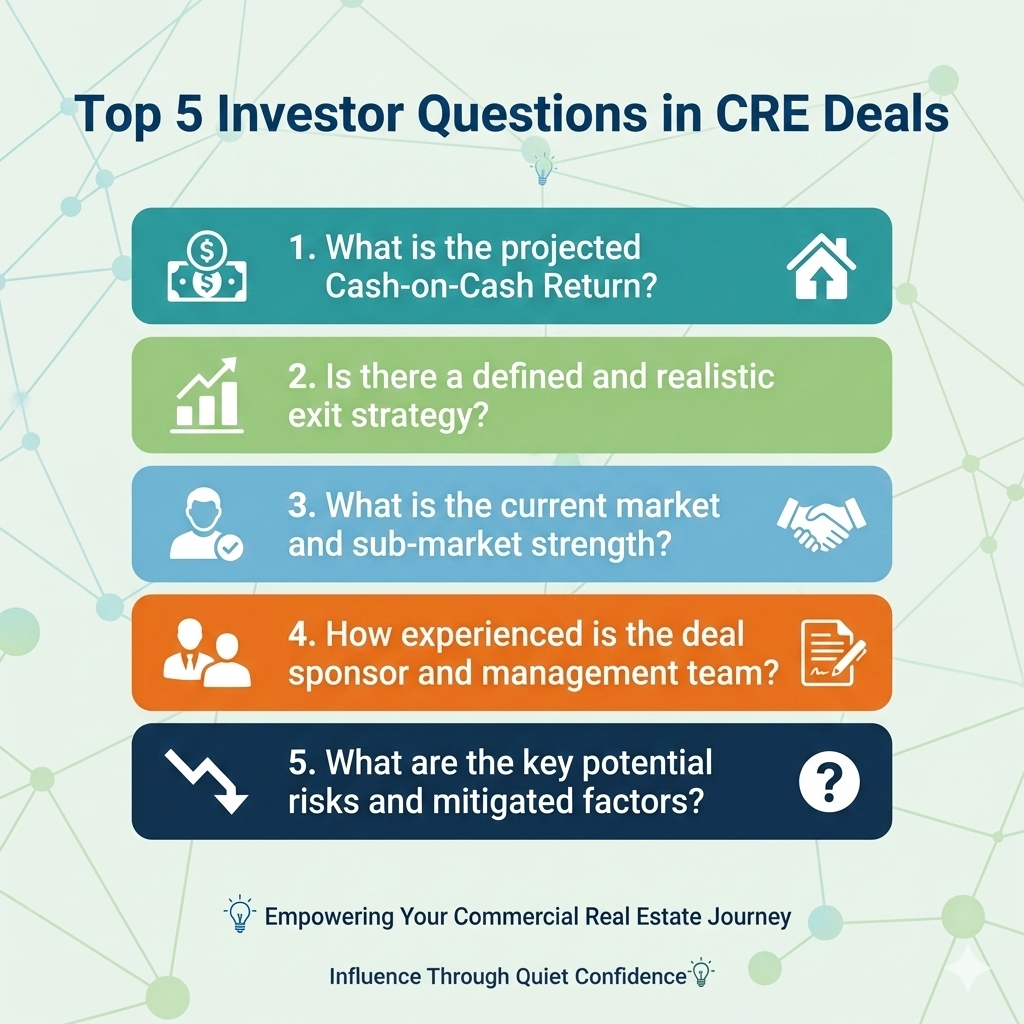
---
Prepare for the Questions
An investor may ask why a cap rate is high, what happens if vacancy increases or how a property compares with another deal. Keep the source records and assumptions nearby. If you do not know an answer, say what you need to check.
The scenarios and figures below are hypothetical examples for practicing the conversation. Use verified information when discussing an actual property.
The 5 Investor Questions You Must Be Ready For
In most CRE deal conversations, investors tend to focus on the same core concerns.
1. “What are the risks?”
Investors don’t expect zero risk. They want to know if you understand the risks.
Confident response example:
“The main risks in this hypothetical example are tenant rollover and additional local supply. We need to test vacancy, leasing costs, and debt coverage. A price below replacement cost alone does not establish downside protection.”
Notice the structure:
- Acknowledge the risk
- Explain it clearly
- Explain the assumptions to test and what would make the deal unsuitable
Confidence comes from transparency.
2. “Why is the seller selling?”
This question is really about hidden problems.
Investors want to know if the seller knows something they don’t.
A strong answer might sound like:
“The seller has owned the asset for 18 years and is reallocating capital into larger developments. The property has performed consistently, but they’ve reached the hold period they originally planned.”
When investors understand the story behind the sale, trust increases.
3. “How does this compare to other deals?”
Investors rarely look at just one opportunity.
They are always comparing.
Instead of defending your deal emotionally, give a structured comparison.
Example framework:
Deal Comparison Snapshot
| Metric | Subject Property | Market Average |
|---|---|---|
| Cap Rate | 7.2% | 6.4% |
| Occupancy | 92% | 90% |
| Rent Growth | 4% | 3% |
Then explain the takeaway:
“The example property has a higher cap rate and upcoming lease expirations. We need to compare the leases, likely vacancy, renewal costs and other differences before explaining the price gap.”
4. “What’s the downside scenario?”
Sophisticated investors always stress-test the deal.
They want to see if you’ve done the same.
Instead of avoiding the question, walk through a conservative scenario.
Example:
“Let’s test 15% vacancy and slower rent growth using the expense, financing, and capital assumptions. I’ll show how cash flow changes and where additional cash could be needed.”
This shows professionalism.
5. “Why do you believe in this deal?”
This question is about your conviction.
Investors want to know if you’re simply presenting a listing, or if you understand its value.
Your answer should connect data with insight.
Example:
“The location and planned infrastructure are worth examining, but neither establishes future rent growth. I’d want to verify the plans, competing supply, tenant demand, and the price before drawing a conclusion.”
Confidence grows when investors hear your reasoning.
A Simple Framework for Handling Investor Objections
Use a short response structure to keep the conversation on the investor’s question.
The 3-Step Confidence Framework
1. Acknowledge the question
Never rush or dismiss it.
Example:
“That’s a great question.”
2. Clarify the concern
Sometimes investors ask broad questions.
Example:
“Are you mainly concerned about the lease rollover or overall vacancy risk?”
This shows you’re listening.
3. Respond with structure
Give a clear explanation supported by data.
Answer the question first, then show the information that supports your answer.
A Hypothetical Conversation
This example shows how an agent might explain a lease-rollover assumption. It is not a record of a client conversation.
Investor: “Why is this property priced below similar buildings?”
Agent: “Great question. The main reason is that two tenants have leases expiring next year. Some buyers see that as risk.”
Investor: “So that’s the concern?”
Agent: “Yes. But it also creates opportunity. The current rents are about 12% below market, so renewing those leases could increase income significantly.”
The potential rent increase is still an assumption. The investor also needs the renewal, vacancy and leasing-cost risks.
Confidence Comes from Preparation
Set aside time to check the documents and write down what remains uncertain.
Before presenting any deal, prepare answers to these five questions:
- What are the biggest risks?
- Why is the seller selling?
- How does this compare to the market?
- What’s the downside scenario?
- Why does this deal make sense long-term?
If you can answer these clearly, investor conversations become much easier.
Before You Present
Prepare the source, date and assumption behind each answer. Leave time for follow-up questions, and keep a list of anything you have agreed to verify.
Download my free 10 CRE Terms Guide.
Download the free 10 CRE Terms Guide → https://khaitranofficial.com/cre-terms