CRE
How to Prospect Local Businesses for Commercial Listings
By Khai Tran · · 5 min read
Start a commercial prospecting list with local businesses, property records and useful questions. Verify the facts before suggesting a property opportunity.
Start With a Local Area
Choose a street or business district you can get to know. Notice which spaces are occupied, learn who owns the properties and ask business owners about their plans. Your observations give you questions to investigate, not conclusions about a property’s finances.
Why Net Operating Income Matters When Researching a Property
A property’s appearance is only part of the picture. Income, expenses, leases and the owner’s plans all deserve a closer look.
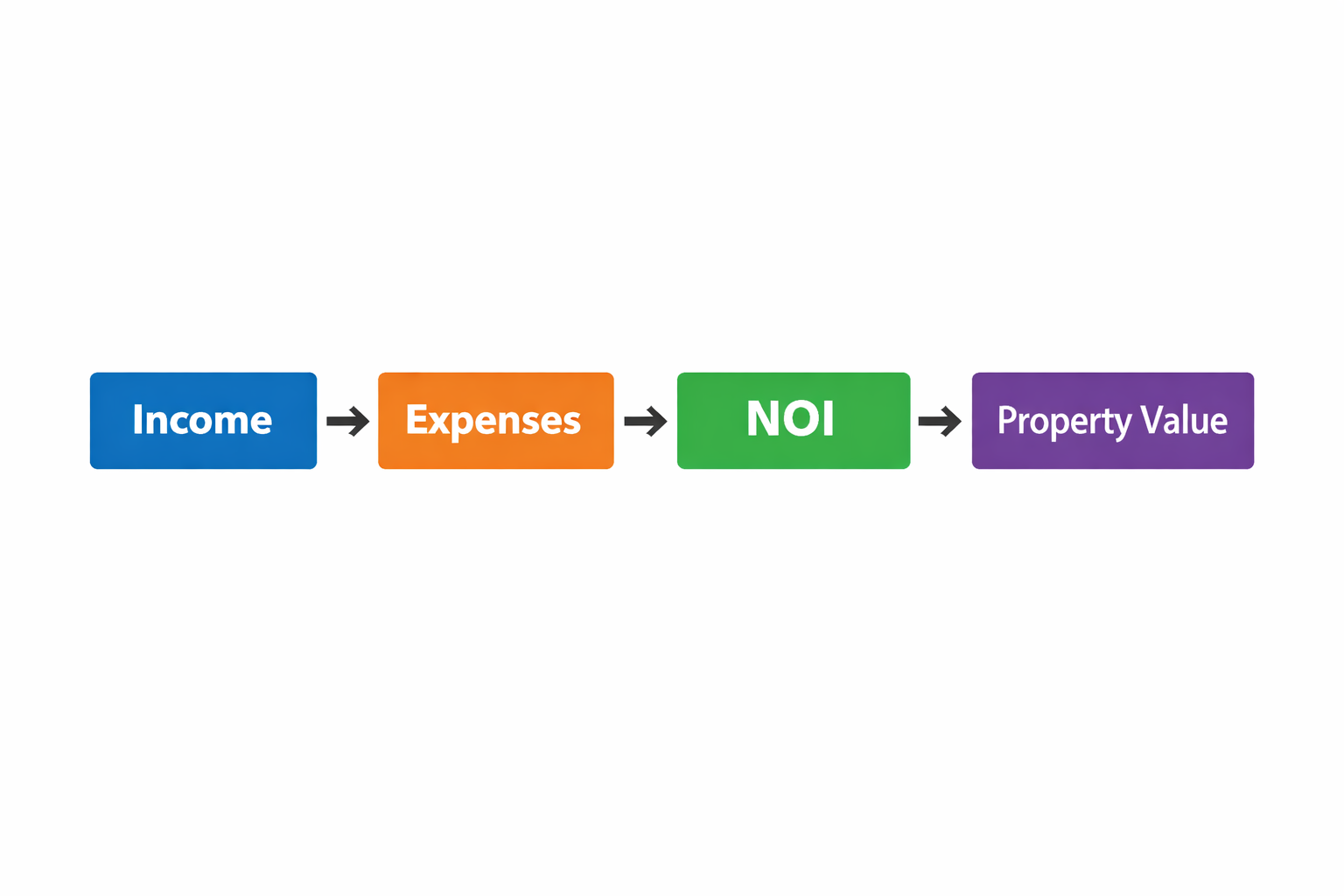
Net Operating Income (NOI) is simply:
Effective Operating Income − Operating Expenses = NOI
And that number determines property value.
Why this matters for prospecting:
- Businesses paying below-market rent → landlord may be underperforming
- Properties with vacancy or poor tenants → opportunity to increase NOI
- Owners with stagnant income → potential sellers
Use these possibilities to decide what to ask next. They do not establish that an owner wants to sell.
Step 1: Identify Business Types That Signal Opportunity
Not all businesses are equal in CRE prospecting.
Focus on these categories:
- Older retail shops with minimal updates
- Family-owned businesses (10+ years)
- Strip malls with mixed occupancy
- Medical or service offices in aging buildings
What you’re really looking for:
- Underutilized space
- Outdated presentation
- Inconsistent foot traffic
Record what you can observe and verify the financial details separately.
Step 2: Read the Street Like an Investor
Before you ever reach out, observe.
Walk the area and ask:
- Are there empty units nearby?
- Are businesses thriving or barely surviving?
- Is the location improving (new developments, traffic)?
Translate observations into NOI thinking:
- Empty unit = lost income
- Poor tenant mix = suppressed rent potential
- Strong location + weak property = upside opportunity
Check these possibilities against records and conversations before using them in an owner presentation.
Step 3: Build a Simple Prospect List
Don’t overcomplicate this.
Your list should include:
- Business name
- Address
- Type of business
- Observations (condition, traffic, vibe)
Optional (if available):
- Property owner (via tax records)
- Estimated rent vs. market rent
Keep the list small enough to research and follow up on.
Step 4: Start Conversations the Right Way (Script)
Start by learning about the business and whether the person wants to discuss their property needs.
Simple opening script:
“Hey, I work with local property owners and I’m studying this area right now. Quick question, how’s business been over the past 2, 3 years?”
Pause. Let them talk.
Follow-up questions:
- “Have you seen rent changes recently?”
- “Do you lease or own this space?”
- “Have you ever thought about expanding or relocating?”
You’re gathering NOI clues, not pushing listings.
Step 5: Connect Business Pain to Property Opportunity
A business owner’s concerns may point to questions about occupancy, rent or the building. They do not, by themselves, show that the owner has mismanaged the property.
Example:
A restaurant tells you:
- Rent is high
- Traffic is inconsistent
- They’re barely breaking even
What this means:
- Tenant may leave → vacancy risk
- Owner may face declining NOI
- Property value may drop
Ask permission before taking the conversation further or sharing their information.
Step 6: Reach the Property Owner with Insight (Not a Pitch)
When you contact the owner, lead with value.
Sample outreach message:
“Hi [Owner Name], I’ve been analyzing properties in your area and noticed some shifts in tenant performance nearby. Based on current trends, there may be an opportunity to improve your net operating income and overall property value. Would you be open to a quick conversation?”
Use an outreach example only when its factual statements describe research you have actually done. Do not suggest a value increase you have not analyzed.
Step 7: Use a Simple NOI Repositioning Framework
You don’t need a full financial model upfront.
Just show possibility.
Basic framework:
- Current rent estimate
- Market rent estimate
- Vacancy adjustment
- Expense assumptions
Example:
- Current NOI: $80,000
- Potential NOI: $110,000
- Cap rate: 7%
That’s a value jump from ~$1.14M to ~$1.57M.
This is a hypothetical value comparison. Explain the assumptions, cost of improvements and risks before treating the higher NOI as achievable.
Step 8: Stay Consistent (This Is a Volume Game)
You won’t get deals from one conversation.
But if you:
- Walk 2, 3 areas weekly
- Talk to 5, 10 businesses each time
- Track insights consistently
You’ll start seeing patterns.
Use what you learn to refine your research and follow-up.
A Practice Scenario
Consider a strip center with two vacant units and a lease that appears below nearby asking rents. Before suggesting a plan, verify the leases, condition, operating records and comparable spaces. Ask the owner what they want to do with the property.
A conversation may lead to more research, an assignment or no change at all. Start with one area you can learn well and keep track of what you still need to verify.
Download my free 10 CRE Terms Guide.
Download the free 10 CRE Terms Guide → https://khaitranofficial.com/cre-terms