CRE
How to Explain Cap Rates to Investors
By Khai Tran · · 6 min read
Explain cap rate with a formula, property context and the investor’s questions. Use AI for a draft, then check every figure and assumption.
How to Explain Cap Rates to Investors Using AI Investor Presentation Scripts
When an investor asks about cap rate, start with the number and what goes into it. Then explain what it leaves out and how the property compares with the alternatives they are considering. AI can help draft the explanation; you still need to check the analysis.
Why Most Agents Struggle to Explain Cap Rates
A formula alone does not answer an investor’s question. Add the source of the NOI, the price being used and the property risks. Be clear about anything you have not verified.
The Simple Framework to Explain Cap Rates Clearly
When you explain cap rates, use this 3-part structure:
1. Define It Simply
“Cap rate is annual net operating income divided by the property price. It is an operating-income ratio before financing, not your total annual return.”
Formula (if needed): Cap Rate = Net Operating Income ÷ Purchase Price
Keep it short.
2. Add Context
Cap rate needs context to be useful.
Explain:
- Market comparison
- Risk level
- Asset quality
- Location
Example:
“These two properties have different cap rates. Let’s compare the leases, condition, market evidence and assumptions before drawing a conclusion about risk.”
Explain what makes the two properties different.
3. Tie It to Their Goals
This is where most agents stop short.
You must connect cap rate to:
- Risk tolerance
- Cash flow preference
- Long-term appreciation strategy
Example:
“You said income stability matters to you. Let’s look at the tenants, lease expirations, expenses and financing behind these cap rates.”
Use the investor’s goals to decide which questions need a closer look.
The Investor Presentation Script You Can Use
Here is a hypothetical script to practice. The figures and property descriptions are examples; replace them with verified information and explain the limits of the cap-rate measure.
Base Script
“In this hypothetical example, annual NOI divided by the asking price is 6.25%. That ratio excludes financing, capital outlays, transaction costs, investor taxes and appreciation. To compare it with another property, we need a consistent NOI calculation and reliable sale and lease information. We should also review the risks that the ratio alone does not show.”
Notice:
- Simple definition
- Market positioning
- Personal alignment
That’s the structure.
How to Use AI to Generate Custom Cap Rate Scripts
AI can help you turn your checked notes into a first draft.
Instead of rewriting scripts manually for every deal, you can use a structured prompt.
AI Prompt Template
Use this inside ChatGPT or your preferred AI tool:
“Act as a commercial real estate advisor. Write a concise investor presentation script explaining a 7% cap rate on a stabilized retail property in a secondary market. The investor prefers moderate risk and steady income. Keep it under 150 words.”
Treat the response as a draft. Check its definition, figures and claims about the market or investor fit. Supply verified context rather than asking AI to invent a comparison.
Advanced: Explaining Cap Rates When Investors Compare Deals
When investors say:
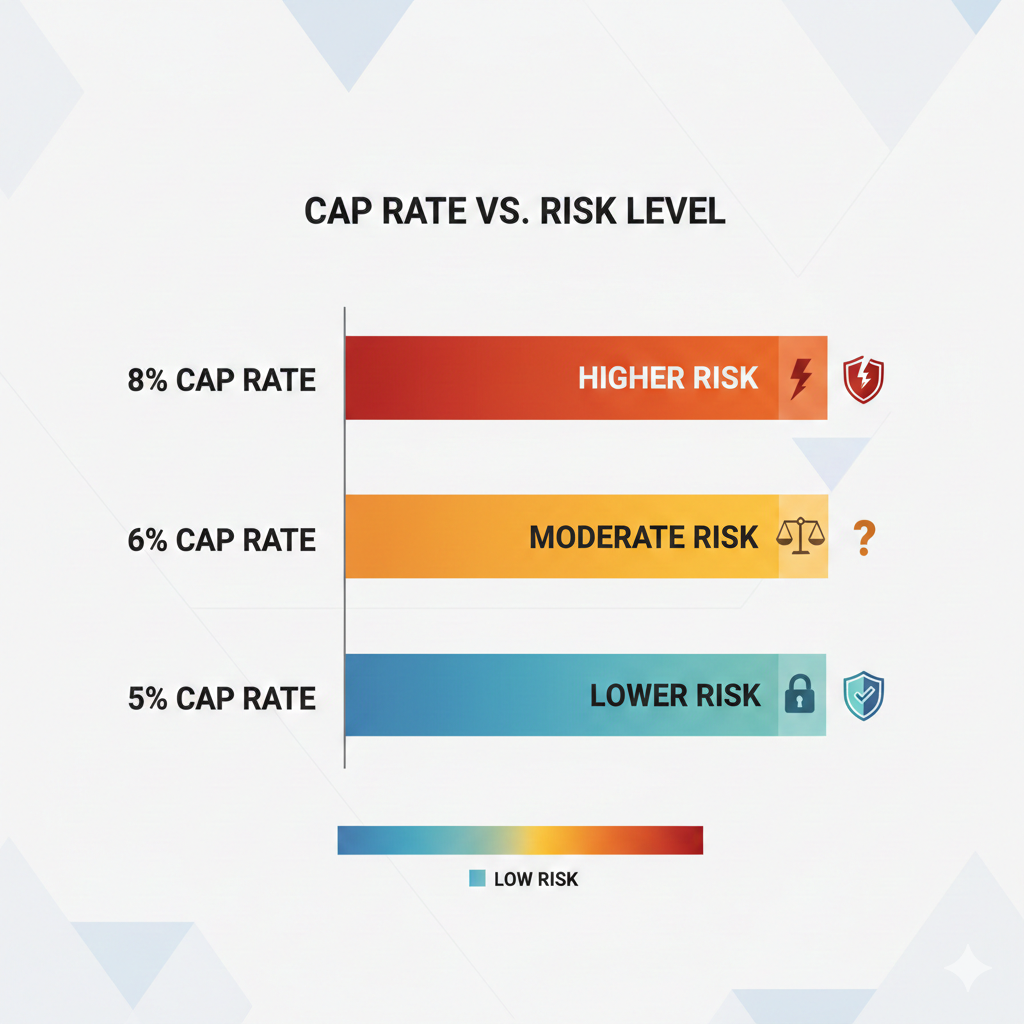
“Why would I buy at 6% when I can get 8% elsewhere?”
Use this response structure:
Reframe Risk
“Let’s check why these properties are priced differently: the leases, tenant credit, capital needs, location and comparable sales.”
Compare Stability
“For this example, assume the 6% property has longer remaining leases. We still need to review the tenants, lease provisions, collection history and expenses.”
Clarify Strategy
“Which risks are you willing to take, and what information would help you compare them?”
Compare the assumptions and risks behind each number. It is fine to conclude that you need more information.
Common Mistakes to Avoid When You Explain Cap Rates
- Over-explaining the math
- Ignoring market benchmarks
- Not connecting to investor goals
- Hiding uncertainty or presenting an estimate as a verified fact
- Using jargon without translation
Before the call, practice the explanation aloud. Keep the formula, source records and unanswered questions beside you so you can show how you reached the number.
Download the free 10 CRE Terms Guide → https://khaitranofficial.com/cre-terms