CRE
How to Educate Investors Without Over-Explaining
By Khai Tran · · 6 min read
Give an investor the main facts, explain what matters and keep the supporting records ready. A practical structure for deal emails and conversations.
How to Educate Investors Without Over-Explaining | CRE Investor Communication
An investor asks about a deal. Start with their question, give the facts that answer it, then offer the supporting records. You can be concise without leaving out a risk or an assumption they need to understand.
Why Over-Explaining Hurts Investor Trust
A long answer can make it harder to find the point.
When you talk too long, repeat yourself, or answer five questions the investor didn’t ask, it can feel like you’re trying to justify the deal rather than guide the decision.
Investors value three things:
- Clarity
- Efficiency
- Judgment
Check whether you answered the question before moving on.
Use the 3-Layer Communication Framework
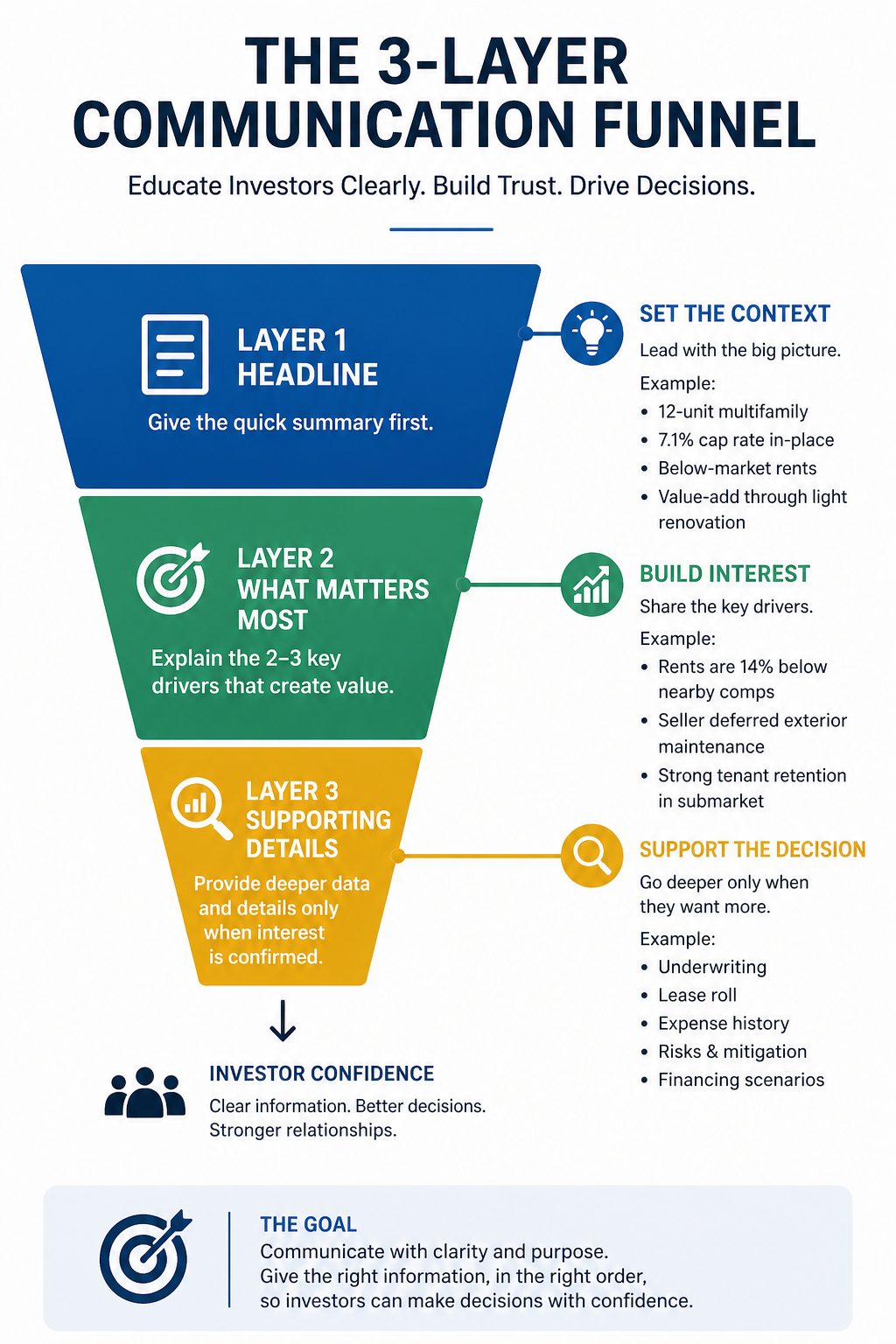
When presenting any deal, organize your communication into three layers.
Layer 1: Headline
Give the quick summary first.
Example:
- 12-unit multifamily
- 7.1% cap rate in-place
- Below-market rents
- Value-add through light renovation
This gives context fast.
Layer 2: What Matters Most
Now explain the two or three key drivers.
Example:
- Rents are 14% below nearby comps
- Seller deferred exterior maintenance
- Strong tenant retention in submarket
Explain which details you have verified and which are assumptions.
Layer 3: Supporting Details
Keep the underwriting, rent roll, expense history and debt scenarios ready to review. Raise material risks and uncertainties early, even when the investor asks for a short summary.
This keeps conversations efficient.
Answer the Question They Asked
A common mistake is turning a simple question into a full presentation.
Investor asks:
“Why is the seller exiting?”
Weak answer:
Let me explain the history of the asset, when they bought it, how interest rates changed, what the market did in 2022...
Strong answer:
Ownership is aging out of active management and prefers liquidity. No distress signal from operations.
Then pause.
Let them ask the next question.
Use the “Pause After Value” Rule
After giving a strong answer, stop talking.
Give the investor time to think or ask a follow-up question.
Silence is often processing, not rejection.
Say the valuable thing. Then pause.
If the question is still open, ask what needs more explanation.
Translate Data Into Decisions
Investors don’t just want numbers. They want meaning.
Instead of saying:
- Vacancy is 8.2%
- Expense ratio is 37%
- Average unit size is 812 SF
Say:
- Vacancy leaves room for lease-up upside
- Expense ratio is healthy for asset age
- Unit mix fits workforce renter demand
Give the source and date for each figure, then explain what it could mean. Avoid treating an interpretation as a verified fact.
Hypothetical Investor Email
Subject: Quick Take , Oakridge Apartments Opportunity
Hi James,
Quick summary below:
- 24 units in growing submarket
- In-place returns are stable
- Upside through rent alignment over 12, 18 months
- Main risk deferred roof work already reflected in pricing
My view: worth reviewing if you want moderate upside without heavy reposition risk.
Happy to send underwriting if aligned.
Best, Khai
This style respects time while showing judgment.
Make Room to Listen
If you prefer to prepare before a conversation, use that time to check your figures and write down the questions you still need answered. During the call, leave room for the investor to explain what matters to them.
A Simple Script for Calls
When discussing deals, use this structure:
1. What it is
“This is a stabilized retail strip with upside on two expiring leases.”
2. Why it matters
“New rents in the corridor are materially higher.”
3. What to watch
“Parking ratio is tighter than ideal, so tenant mix matters.”
4. Next step
“Would you like the full package?”
Use this order as a guide, and adapt it to the property and the investor’s questions.
Before the Next Investor Conversation
Write a short summary, list the assumptions and risks, and have the supporting records ready. Ask the investor which part they want to examine first.
Download the free 10 CRE Terms Guide → https://khaitranofficial.com/cre-terms