CRE
CAM, Taxes & Insurance: Questions to Ask Before Leasing
By Khai Tran · · 6 min read
Review the costs beyond base rent, including CAM definitions, caps, reconciliations, taxes, insurance, and questions about future increases.
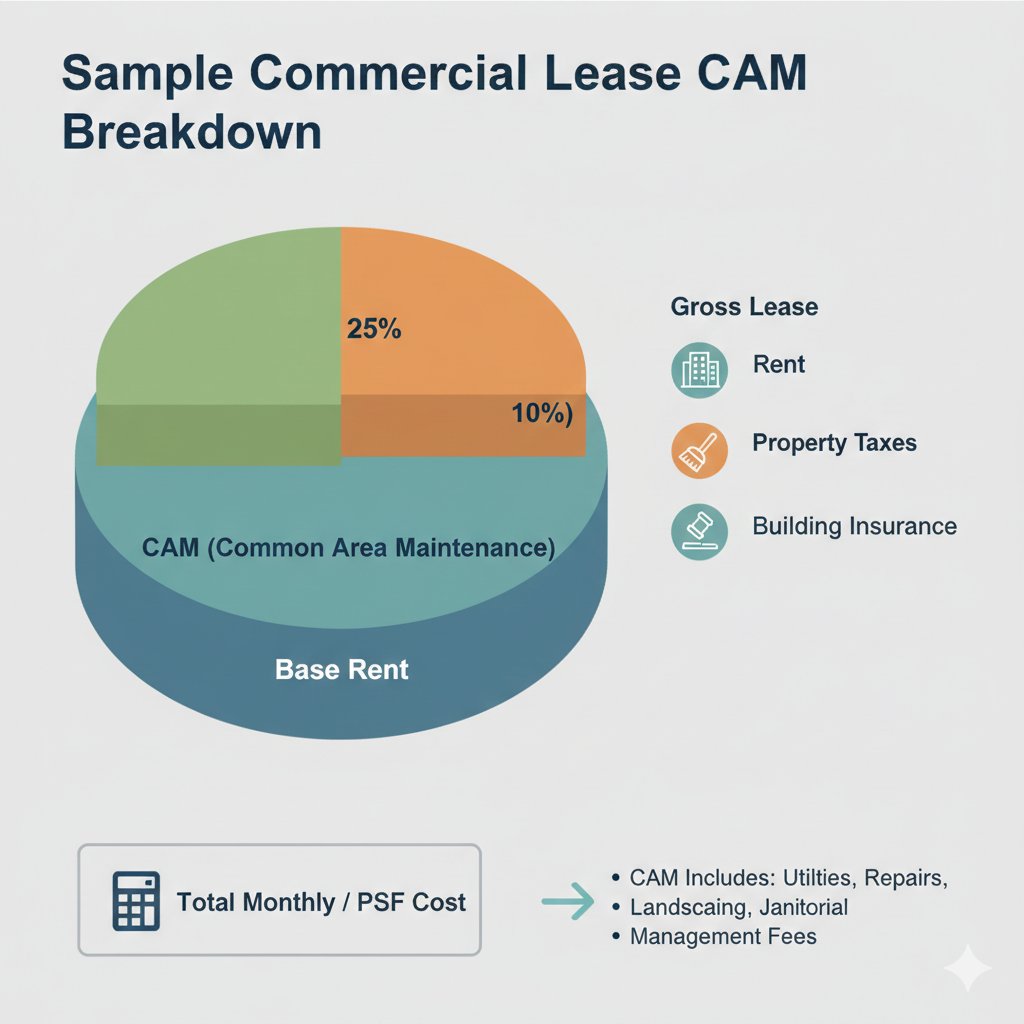
Base rent is only one part of an occupancy budget. A tenant also needs to understand which operating expenses the lease passes through, how those charges are calculated, and when they may change.
The sections below organize the questions to ask about CAM, taxes, and insurance.
What Are CAM Charges? (Simple, Client-Friendly Definition)
CAM stands for Common Area Maintenance.
In plain language:
CAM charges cover the shared costs of operating and maintaining the property that all tenants benefit from.
Typical CAM Expenses Include
- Parking lot maintenance and striping
- Landscaping
- Snow removal
- Common area utilities
- Property management fees
Key reminder: Check the lease definition of CAM and the supporting expense statements; the label alone does not tell you what is included.
Taxes & Insurance: Why Clients Lump Them Into CAM
Many clients think CAM is one big mystery bucket.
In reality, most CRE leases break expenses into three categories:
- CAM
- Property Taxes
- Property Insurance
Together, these form the foundation of NNN (Triple Net) charges.
A Sample Explanation
“Think of rent as the cost of your space. CAM, taxes, and insurance are the cost of operating the building itself.”
Follow the explanation with the specific charges in the proposed lease.
CAM Charges Explained by Lease Type
Lease labels provide a starting point; read the expense provisions to confirm the actual obligations.
Full-Service (Gross) Lease
- Specified expenses may be included in rent
- The lease may pass through increases or exclude certain costs
- Review the actual expense provisions
Modified Gross Lease
- Base rent includes some expenses
- Increases may passed through annually
- CAM clarity still matters
NNN (Triple Net) Lease
- Tenant pays:
- Base rent
- CAM
- Taxes
- Insurance
- Most common in retail and industrial CRE
Ask which expenses are included, which are estimated, and which could change.
Five CAM Questions to Review
Use the lease and expense statements to work through these questions.
1. What’s Included, and What’s Excluded?
Ask:
- Are capital expenditures included?
- Is roof or structure excluded?
- Are management fees capped?
Record any exclusions or limits and confirm their wording in the lease.
2. Are CAM Charges Capped?
A cap may limit specified increases; review its calculation, exclusions, and any cumulative provisions.
Look for:
- Fixed percentage caps
- CPI-based caps
- Uncapped “actuals” language
Show how the proposed cap works and identify charges outside it.
3. How Are CAM Increases Calculated?
Clients want predictability.
Explain:
- Historical CAM trends
- How often reconciliations occur
- Whether true-ups are common
Use the available statements to separate historical costs from estimates.
4. Who Controls the Numbers?
Property-managed vs owner-managed buildings matter.
Ask who prepares the CAM estimate, who reviews the annual reconciliation, and what supporting records are available. Regardless of who manages the property, review the calculation and supporting documents.
5. What’s the Worst-Case Scenario?
Discuss what could change the estimated occupancy cost.
Help them understand:
- Exposure during major repairs
- Tax reassessments
- Insurance premium spikes
Show which costs are known and which remain uncertain.
A Simple CAM Charges Example (Use This with Clients)
Here is a simplified hypothetical example. It is not a complete occupancy budget or a promise about future charges:
“Your base rent is $12/SF. CAM estimated at $4/SF, taxes at $2, and insurance at $1. So, your all-in occupancy cost is closer to $19/SF. We still need to check the lease for other obligations and how these estimates can change.”
Check whether the proposed lease adds utilities, maintenance obligations, or other costs beyond these figures.
Common CAM Mistakes Agents Make
Mistake #1: Glossing Over CAM to ‘Keep Momentum’
Review the charges before asking the client to make a decision.
Mistake #2: Saying “It’s Standard”
Explain the actual provision and how it affects this tenant.
Mistake #3: Not Reviewing Past CAM Statements
Review available historical statements and explain their limits. Past costs do not guarantee future charges.
Keep a written list of the expense questions that remain open. Confirm the answers with the landlord or property manager and have lease provisions reviewed by the appropriate adviser.
Download my free 10 CRE Terms Guide to sharpen how you explain CAM, NNN, and lease structures.