CRE
1031 Exchange Basics for Real Estate Agents (with Timelines)
By Khai Tran · · 5 min read
A practical introduction to the 1031 exchange timeline, the agent’s role, and the questions to take to a qualified intermediary or tax adviser.
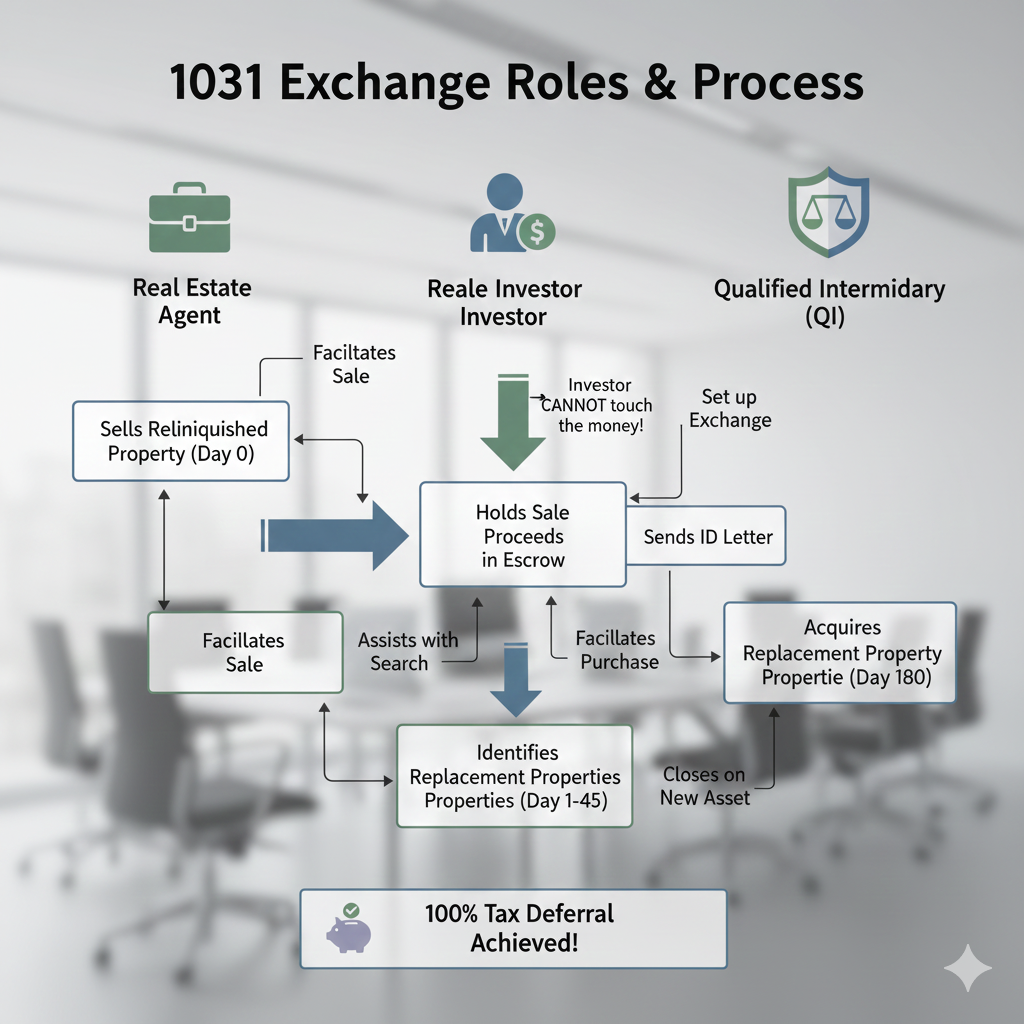
A 1031 exchange can affect an investor’s property search and closing schedule. An agent needs to understand the process well enough to coordinate with the investor’s qualified intermediary and tax adviser.
This guide covers the basic timeline and the limits of the agent’s role.
What Is a 1031 Exchange (Agent-Level Definition)
A qualifying 1031 exchange can defer recognition of gain when business or investment real property is exchanged for like-kind real property under the applicable rules. Confirm eligibility and structure with the investor’s tax adviser and qualified intermediary before closing.
Key word: defer, not eliminate.
As agents, our job is to:
- Recognize when a 1031 may apply
- Understand the timing rules
- Coordinate with qualified intermediaries (QIs)
- Keep the deal moving without giving tax advice
Like-Kind Property: Common Examples
The properties must meet the applicable business or investment-use conditions. A change from one property type to another does not by itself disqualify an exchange, but the type labels do not establish eligibility either. U.S. and foreign real property are not like-kind to each other.
Have the investor’s tax adviser and qualified intermediary confirm the proposed exchange before closing.
The 1031 Exchange Timeline
Step 1: Sale of the Relinquished Property (Day 0)
- The clock starts the day the property closes
- Sale proceeds must go directly to the Qualified Intermediary
- Investor cannot touch the funds
Receipt or control of proceeds can affect qualification. Have the qualified intermediary and tax adviser establish the exchange arrangements before closing rather than assuming the proceeds can be moved later.
Step 2: 45-Day Identification Period
Within 45 calendar days, the investor must:
- Identify replacement property(ies) in writing
- Submit identification to the QI
- Follow IRS identification rules (most commonly the 3-property rule)
The identification period is generally 45 calendar days. Do not assume weekends or holidays extend it; have the advisers confirm any applicable IRS relief.
Start the replacement-property search early enough to discuss alternatives before the identification deadline.
Step 3: 180-Day Exchange Period
The investor must:
- Close on one or more identified properties
- Receive the replacement property by the earlier of 180 days after transferring the relinquished property or the due date of the tax return for the transfer year, including extensions
Important nuance: The 180 days runs concurrently, not after the 45 days.
The identification deadline is generally day 45. The exchange deadline is no later than day 180 and may be earlier because of the tax-return due date. Confirm the exact dates and any applicable relief with the advisers.
A Simple Timeline Example You Can Use with Clients
For a simplified relative timeline, treat the transfer as day 0. Identification is generally due by day 45. Receipt of the replacement property is due by the earlier of day 180 or the applicable tax-return due date, including extensions. The two periods run together.
Use dates confirmed by the qualified intermediary and tax adviser in the client’s transaction calendar.
Common 1031 Mistakes Agents Should Help Prevent
Keep the search and closing work coordinated with the investor’s advisers.
Mistake #1: Waiting Too Long to Look for Replacement Properties
Agents should be sourcing before the sale closes.
Mistake #2: Overconfidence on Identification
Discuss backup properties with the investor and qualified intermediary before the identification deadline.
Mistake #3: Confusing “Like Kind” With “Same Use”
Like-kind treatment can apply across different real property types, subject to the exchange requirements. Ask the tax adviser to confirm the use, holding, and location conditions.
Your Role as the Agent (And Where the Line Is)
Keep these responsibilities separate:
You Can
- Explain timelines
- Coordinate with QIs
- Source and underwrite deals quickly
- Keep communication tight
You Should Not
- Give tax or legal advice
- Confirm eligibility definitively
- Recommend skipping professional guidance
Confirm tax and legal questions with the appropriate adviser.
Investor Script: How to Introduce a 1031 Exchange
Here is a sample introduction to adapt after discussing the property with the investor:
“Based on how you’re holding this property, a 1031 exchange may be an option to defer capital gains. I’ll help you with the real estate side and timelines, and we’ll loop in a qualified intermediary and your CPA to confirm structure.”
An agent can help organize the property search, keep track of confirmed dates, and keep the advisers informed. Eligibility and exchange structure need professional tax and legal review.
For the IRS overview, see Like-Kind Exchanges: Real Estate Tax Tips and the Form 8824 instructions.
Download my free 10 CRE Terms Guide to strengthen your investor and client conversations.